

Retractable Leashes (Are Flexi’s Evil?)
The retractable leash is a hot topic amongst dog people. Let’s explore this issue together.
Retractable leashes, also known as Flexi leads, are the kind of leashes that retract in and out of a bulky plastic handle.
I'm going to come out of the gate to say that I differ from a lot of dog enthusiasts and professionals, because I don't hate retractable leashes. This tool would not exist if it didn't fill a need. When used appropriately, it is a lovely tool!
Personally, I bought my first retractable leash when we amputated my 11 year old dog's front leg. He was tripping on the long line, and I found the retractable leash to be a much better solution for him. When a dog loses a leg, it is actually easier for them to move faster because the hopping takes more energy than running, and especially for front-amputees, there is a lot of pressure that can be painful that gets put on that front leg when hopping around. Cooper runs up a ways, stops and rests and waits for me to catch up. For me, the combination of not wanting him to trip on a leash, and the constant forward motion. This is a pretty specific, personal reason, but if it is a reason that I have, there are no doubt others that make this decision for the same reason I am extra careful about keeping him away from potential dangers. I walk him more often in a field and less on the sidewalks. When we are on the sidewalks, I don't let him get as close to the street as I may have with the long line because I know I won't be able to reel him in quickly if danger presents itself.
There are, however, some very real and serious safety risks that come with the retractable lead. Let's explore the retractable lead together.
What kind of dogs do WELL on a flexi?
These are the kind of dogs that the owners never feel like they need the help of a professional. They don't startle easily. They don't lunge when they see other dogs or people while out walking. Dogs that have never ever ever ever ever EVER put their teeth on another dog, domestic animal or a human's flesh. And I mean never. Dogs that have REALLY REALLY REALLY solid recall. I'm talking about the kind of recall when something wild and crazy and super-exciting is happening, and your dog will still come running when you call. These are the kind of dogs that do well on a flexi. No startle, no teeth usage, excellent recall, no lunging or big reactions to anything - cars, people, dogs, squirrels, etc.
Unfortunately, reactive dogs don't fit this description. If you have a dog that lunges at things (cars, people, other dogs, bicycles, baby strollers, etc.), the flexi gives you very little physical control over your dog's body. Some people may keep it on lock to combat this issue, but this defeats the purpose of using a flexi lead, and a solid leash is still much safer.
The Good
1.) Many people want to give their dog more freedom than a standard 4-6 foot leash. I fall into this camp as well! I desperately want dogs to have the opportunity to move more freely. There is just more ROOM, physically for the dog to move, and more room to make correct choices. When we give dogs more choices that are acceptable to us, they can make more choices that are acceptable to us. Fewer of the dog's choices are seen as bad or wrong in the human's eyes. This leads to a stronger relationship because the human isn't angry with their dog as often, and the dog retains some autonomy, and those are all things that help maintain a stable healthy dog and healthy stable relationship between species. I fall into that give my dog more freedom camp. That is why flexis have a good checkmark in my list of pros and cons.
2.) People like the flexi is there is less tangling. Some folks are concerned about the leash getting under their dog's legs. Luckily, unless your dog has some really sensitive skin or leash sensitivity or phobias, most dogs do not care about the leash getting under their legs. Interestingly, many people will use aversive methods to control their dogs (shock, pinch, choke collars, etc.), but they'll get deeply concerned about the dog's discomfort if the leash gets under the dog's legs, which is very interesting to me. People like the flexi because it doesn't get under the dog's legs very often. I think this is an education thing; the dogs don't really care, so we shouldn't care. While it goes in the pro column for flexi users, this is a non-issue in my book.
3.) Some people find the handle easier to hold onto. I do think that if people knew how to hold a solid leash appropriately, this would be a non-issue. I think if people learn to hold a leash (particularly a long line) and get over the leash-under-dog panic, this would fall away as an issue. So while this goes in the pro column for some folks, it is a non-issue to me.
The Bad
Let's just get it out in the open. There are valid reasons why retractable leashes have a bad rap.
1.) In my opinion, the most serious issue is how difficult it is to "reel in" a dog that's connected to the end of a retractable leash. The mechanism in the retractable lead is built to let line out when there is pressure; as long as there is pressure, the line doesn't come back in. There is no button or motor that physically reels the dog in. If you get into a pickle when your dog is 15 feet away from you, there is no fast way to physically pull your dog in towards your body. You can lock the leash, which prevents the dog from continuing to move away from you, but shortening that leash without the dog's cooperation is just really difficult, and can actually leave the handler with an injury. These leashes can cut into flesh like butter and even sever fingers.
2.) If you drop the handle of a retractable leash, it will make a loud noise. The noise alone can scare many dogs, but if the leash was unlocked when it fell, it will immediately start to retract. Without the tension provided by a human hand, the handle will start to "chase" the dog. Many dogs find this disturbing, and will run away from the handle, which of course doesn't work, and only adds more chaos to the calamity. Depending on your dog's resilience, this could be a traumatic event, and could cause leash reactivity or other leash walking problems. These handles are bulky and easy to drop, so adding a wrist strap to the handle (and attaching that to your wrist every time) increases safety.
3.) Retractable leads allow dogs with less observant handlers to wander unescorted into other people’s and dog's space. The owner isn't paying attention to their dog, doesn't have the leash on lock, doesn't realize that their dog is moving toward another dog or a human. And that human or dog may not want to be interacted with. They may be sick, or have an allergy to dogs. It may even be dangerous. Many people have dogs that are just fine with appropriate distance, but when their space is invaded, they dislike that. And SOME dogs do use their teeth to express their displeasure (and those dogs are not appropriate for flexi leashes). Those dogs SHOULD be wearing muzzles too, but it's also the owner of the dog that is encroaching on another's dog's space to ensure their dog isn't doing things that it shouldn't. It seems like a lot of folks that use flexi leads just aren't paying attention to what their dog is doing. Part of this may be because flexi users tend to have really sweet, easy, gentle dogs, and if you've only every had dogs like this, you may believe that all dogs are like this. If you’ve only ever been exposed to easy, docile dogs, you may not realize that not every dog is sweet and gentle, and you may think that it is fine for their dog to go up to other dogs. But this is rude and dangerous! As responsible handlers, it is always our duty to keep our dog at a respectful distance from others. If your dog is getting into trouble before you're even aware, something bad can happen long before you could ever react.
Once a dog on a flexi is going up to someone or another dog that isn't consenting to be interacting to this, and the owner notices and is like oh shoot, I need to get my dog out of there. Then we are back to that issue of not being able to pull your dog out of there physically, so you have to rely on recall. Which is why in my list of appropriate dogs, I said that dogs with the most solid recall are a good fit for flexi lead usage. You want the kind of dog that will come back even if their favorite thing is in front of them. And this is HARD. This is hard even for the best, most polite dogs. And it can feel impossible for dogs with Issues.
4.) Stopping to tie shoes is difficult with a flexi lead. With the flexi, you can't really do it well. I end up letting out a bunch of leash, lock the mechanism, then step on the ribbon with my foot to keep it under control. I tried to step on the plastic handle part, but the bulk didn't feel safe. If the dog spooked or lunged, the handle could have shot out from under my foot.
5.) Many anti-flexi folks will say that these leashes teach your dog to pull. This just isn't true. It's not factual. Their logic is, “when your dog puts pressure on the leash, they get more line, so it teaches them to pull.” But the amount of pressure required to engage that mechanism is so small that dogs don't even notice. Most dogs that pull are putting way more pressure on the leash without ever even having been on a flexi leash. When you dive into this argument, it doesn't hold water.
6.) The more space your dog has between you and the end of their leash, the more speed they can rack up. This is just physics; it's why we take a running start when we need to jump over something. More speed means harder stopping force. And if you're holding a flexi lead handle, you might drop it when that force is acted upon your hand. But again, this is why dogs that lunge, startle and chase aren't good candidates for flexi leads. I prefer to use long lines, usually about 15 feet. The speed problem is real, but I don't find it to be as big of a deal when we hold the leash correctly. So while this is a valid concern, if we have the right dog using this leash, we should never (or rarely) encounter this issue.
7.) Retractable leashes are not safe for use with reactive dogs.
If you are walking, and a trigger appears, and you weren't prepared, now you've got a reactive, potentially dangerous dog running to the end of the line and lunging at a person (or a dog or trying to chase a car, etc.). You probably would rather have your dog closer to you rather than 15-20 feet out in front of you when they're having a reaction like that. At the very least, you will want to get your dog away from the "victim" so that the person is not afraid. But you have limited options to pull your dog back to you at this point. If you push the lock button, that prevents them from going out further, but that doesn't help if the dog is already at their maximum distance, and it is so hard to reel that in. This is where people often drop the handle, either because the handle pops out of your hand when the dog hits the end hard, or, because your adrenaline is up, your cortisol is up, you're not using your prefrontal cortex, you're using probably your amygdala, which is tasked with getting you out of danger quickly. You're not able to make the best, most rational decisions when the amygdala is in charge. The Amygdala's job is to keep you safe, so it does the fastest, easiest thing it can think of to get you out of danger. You're bypassing your critical thinking skills when you're in this elevated state. So this is when people's hands will fail them, and now the dog is free to run off, attack, chase a car, etc.
AND THEN, to add to this chaos, we have this big piece of plastic that looks like it is chasing the dog from the dog's point of view. Some dogs may not care, but for many dogs, this is the stuff of nightmares. If it is on lock, it stays the same distance from the dog, so they feel like they're never making progress on escaping. It is nearly impossible to catch a running dog because they have four legs and they're just faster than humans. And if it is not on lock... have you ever played with a tape measure? Maybe when you were a kid and you and a sibling were stretching it out and your sibling who had the big metal box part lets go, and you're still holding on, and this big Thing comes flying at you, and it can hurt you when it hits you because it has gained a bunch of speed, reeling itself in. The same thing happens with a dropped flexi handle. When it gets to your dog, it could hurt them because, well physics. It's moving fast, and when things move fast they HURT if they make contact. So then we can end up with a traumatized dog, making them even more reactive or difficult to walk in the future.
Making a purchase
If you have a dog that you think will do well on a flexi lead, and you’re ready to buy, shopping for the right flexi lead for your body is important.Another thing you need to look out for when using/choosing a flexi lead is how easy it is to hold the handle in your hand. I personally have pretty small hands. Some of these flexi handles have buttons that I can't reach easily. You don't want to need to adjust your grip in order to use the button because in an urgent situation, you need to act quickly, your body doesn't work as well especially under stress. I know I've said before, when your adrenaline and cortisol shoot up, your prefrontal cortex (the smart, rational part of your brain) isn't in charge, and you need to rely on habits to get through to safety. You need to choose a flexi lead that fits your hand in a way that your thumb can reach the button without adjusting your grip at all.
So what do you think? Is a flexi lead right for you?
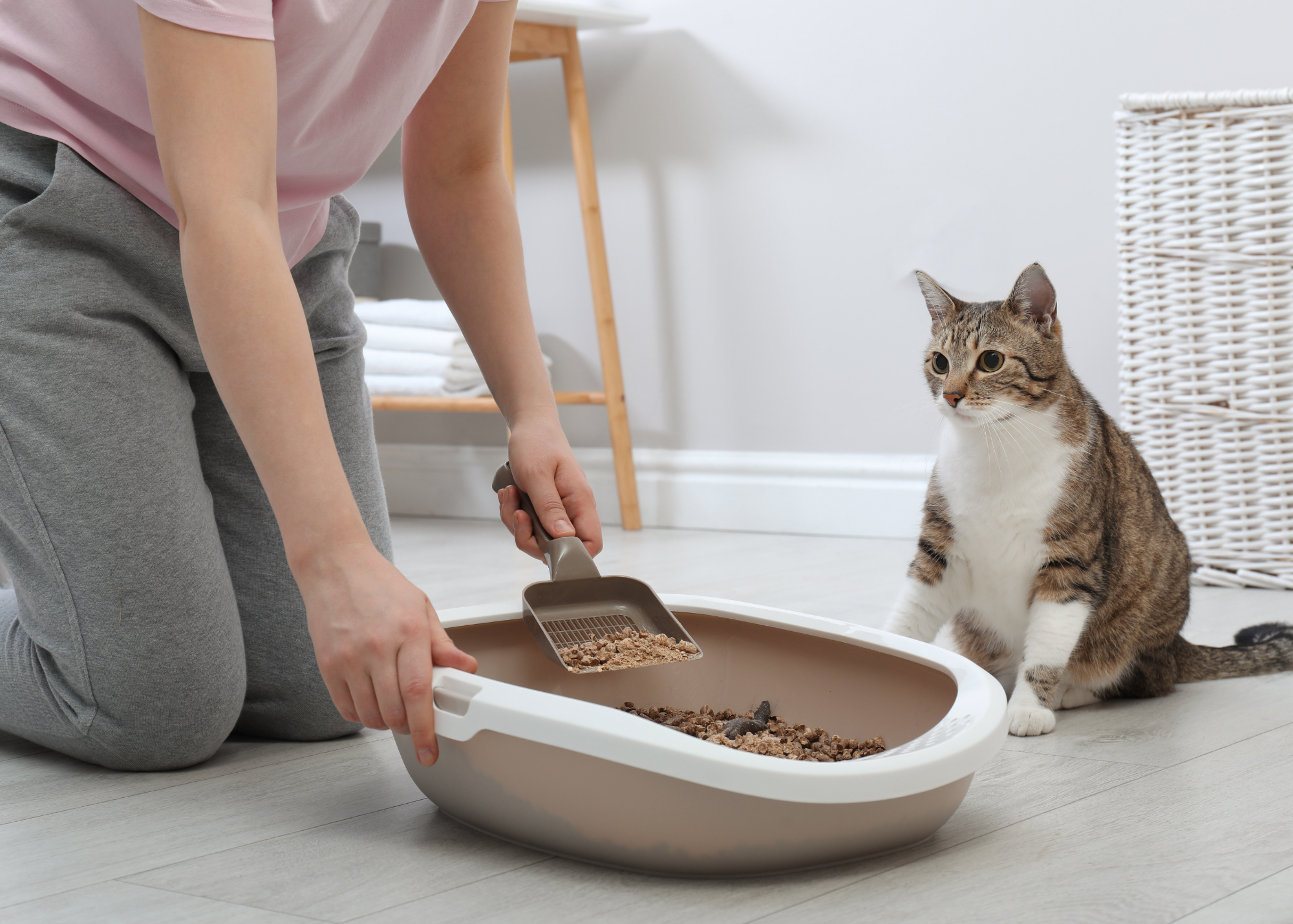
Litter Box Issues?
Vets and Trainers often need to team up to help pets with a single problem. Cats and litter box issues are a common one!
Have you ever wondered why if your cat isn’t using their litter box everyone says to check for urinary tract infection?
We should seek the advice of a vet to explain why that is the physiologic biological pieces, but there is a behavioral component as well. When we have infections in our waste-elimination parts, eliminating is painful. Some animals will associate that pain with the location, smell, or substrate of their bathroom. Because of this, some cats will still struggle to go back to their litter box even after successful treatment of the infection.
For cats, stepping into their litter box is followed by urination, which is painful. These poor cats are experiencing an aversive stimulus immediately after stepping into their litter box! We know that punishment decreases the probability of a behavior, so if they’re experiencing something aversive when stepping into their litter box (and the aversive is working as a punishment), those cats will stop entering their litter box.
But the bodies are funny little things, and they have to eliminate waste. They have to go to the bathroom somewhere, so they’ll often choose a new place with a totally different substrate. Perhaps your wood floors, your bed, or your bathroom rug.
If, when the cat starts eliminating elsewhere, the infection is still present, the pain will still be there. Soon that new place may become poisoned as well. The cat may continue looking for a place, so it looks like your cat is just peeing indiscriminately. We get this idea that the cat just refuses to use the litter box. But what really could be happening is they’re trying to find a place to go to the bathroom that doesn’t hurt. They don’t have the view that we have. They may not know that they could be sick. If they do know, they don’t have the ability to take themselves to the vet to get checked out.
This is why vets and trainers often need to team up to help an animal with the same issue. We each have an important role to play in the care of pets.
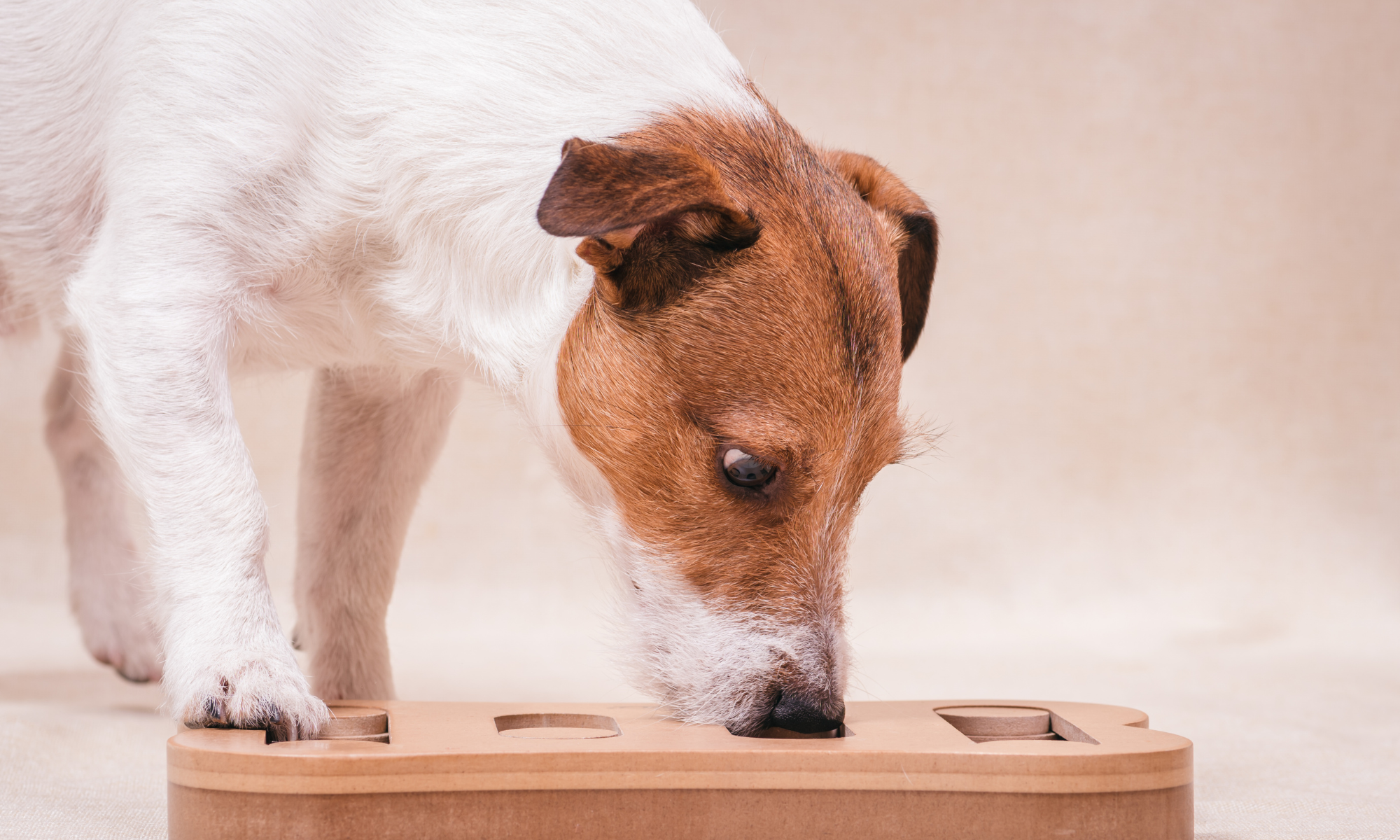
MEALTIME ENRICHMENT
Feeding out of enrichment toys at least once a day is a great way to make sure your dog is getting some time to be a Real Dog.
Most of us do a good job of providing our dogs with enough physical exercise, but we often don’t realize that our dog’s mind needs a workout too! The good news is, we don’t need to dedicate a whole lot of extra time to this; meal time is an excellent time to get some extra training and mental exercise in for your dog. You’ll find a mix of games and DIY puzzles to choose from below.
*If your family consists of multiple pets or children, prevent resource guarding and bites by making sure no children or other pets can interfere with these games and puzzles. You may want to put your dog in a room and close the door while you supervise.
*This is a good time to consider the stoppage of free-feeding if that is your current system. Training, overall, will be more effective if your dog learns that food isn’t free, it needs to be earned, and YOU are the keeper and giver of life-sustaining calories. Once your dog realizes that you hold the key to the things he wants, training will be much easier.
DIY Food Puzzles
Bottle Food Dispenser
Find an empty 2-liter soda bottle, clean and dry. Drill many holes into the bottle, just big enough for your dog’s kibble to fall through. Feed all or some of your dog’s meal from this. They will learn to bat the bottle around to make food fall out. You may need to show your dog how it works at first. If your dog seems frustrated, drill larger holes so the food falls out more easily.
Frozen Kong
Dice up some veggies and cooked meat, mix with some kibble (or just use regular kibble on its own) and stuff into a large Kong. Seal with peanut butter (ensure the peanut butter is dog-safe, no xylitol) and freeze. I will make a full week’s worth of frozen Kongs for my dogs so that I always have them on hand when I need them. Give this to your dog when you need him to quietly occupy some time on his own (during Baby’s naptime, when you’re on an important phone call, etc.). This will work without the freezer, but your dog will finish his treat quickly. Kongs can be cleaned by soaking in warm water with dish soap or on the top rack of your dishwasher. I especially like this exercise as a kennel reward.
Towel Roll
Find an old towel you no longer care about, clean and dry. Lay the towel out flat and sprinkle some kibble all over. Fold in half, lengthwise, sandwiching the kibble inside. Sprinkle some more kibble on top of the folded towel and roll it up tightly. Let your dog unroll and enjoy! You may need to unroll slightly to show your dog for the first time. Here a few videos – Pepper, Simple Feeding, Towel and Laundry basket.
Snuffle Mat
The snuffle mat works much like the towel roll, but it is easier and doesn’t move around. This is the perfect solution for dogs that startle easily or give up quickly. This is just a mat made of fabric scraps. It hides food pieces slightly. This is what they look like.
Food Games
Find It
Hide small piles of food under/inside cardboard boxes. Your dog will have to learn to remove the boxes to get his meal. When your dog gets really good at this game, you can incorporate some empty boxes. This will make the hunt more difficult and heighten the excitement of finding a box that does contain food.
Hunting
Simply hide small piles of food around the room or throughout the house. If your dog is a heavy resource-guarder, stick to one room and close the door to keep children and other pets from interfering. Your dog will quickly learn to hunt for his food, using up mental energy throughout the day.
Choose the Correct Hand
Place some food in one hand, leave the other empty. Make both hands into a fist. Present your fists to your dog. When he touches the correct hand with his nose, reward him by opening your fist and allowing him to eat the contents. When he gets good at this game, you can require your dog to sit before he is rewarded.
Training
You can also use your dog’s mealtime to double as your training time. It’s a great way to train fun party tricks like this – Would you rather… It doesn’t take a ton of time; 30 seconds up to 10 minutes each day are perfect for optimal learning and retention.
For more ideas, visit the Facebook group Canine Enrichment.
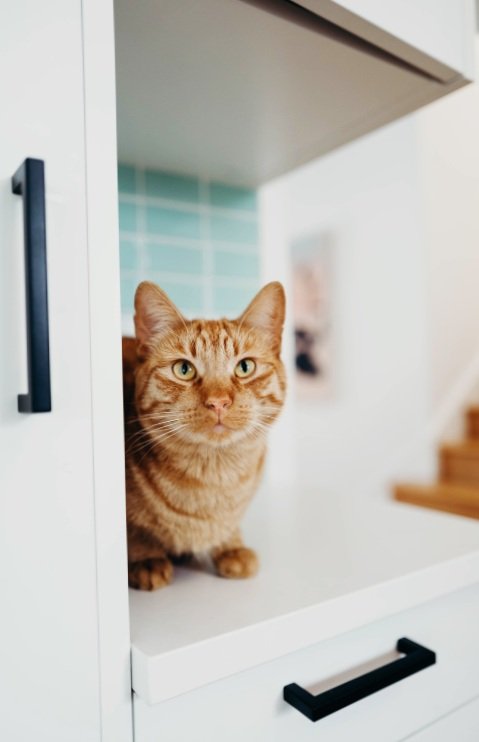
Cats on the Counters
Deciding on how you’ll deal with cats on the counter is something to think about before you ever get a cat.
If your cat jumps up on the counters, you probably don’t like the thought of those litter-kickers all over your food prep surfaces. So you peruse the internet and find a brilliant solution. Maybe you spray the cat with water or you shake a can of pennies in an attempt to scare your cat away from the counter.
There are several possible outcomes:
1.) It Works
If, after 1-5 repetitions, you notice a shift in your cat’s behavior around the counters (they stop jumping up there), you’re golden! And you’re in the lucky minority of cat owners. You’re done! You probably don’t need to keep reading this article. Go celebrate with an ice cream cone; life is good!
2.) It sort of works.
The cat may jump off, which may make you think it works. But the cat may come right back, or come back when you’re not looking. If this is happening, then your training plan isn’t really working. It may seem like it’s working, because the cat jumps off, but your cat probably isn’t learning what you want him to learn. Your cat might be learning that it’s not okay to jump on the counter while you’re looking, or while you’re in the room, but it’s okay at other times. If our goal is to train the cat not to jump up on the counters at all, we need to rethink our plan.
This scenario is one that can lead to the most frustration and animosity between cat and owner. If the human really wants their cat to stop, and the human is convinced that this should be working, but the cat is just stubborn, this may lead the owner to dislike their cat, or even think their cat doesn’t love them because the cat refuses to listen or follow the rules. This can even lead some owners to consider even more extreme measures, getting caught up in an escalating cycle that never ends. I don’t have real data to support my opinion, but I think this is what happens in most cases.
3.) It Doesn't Work At All
Maybe your cat likes to be sprayed with water. Or maybe the sound of the penny-filled can just doesn’t bother him. Most of us living organisms have genes that tell us to persist in the face of adversity. That means that we’ll tolerate pain and discomfort in order to keep existing, eating and reproducing. If you’ve ever heard a trainer say “Reinforcement drives behavior,” this is what we mean. For these reasons and more, punishment just isn’t as helpful as reinforcement, when it comes to molding or modifying an animal’s behavior.
Some owners might resort to using pain or other more powerfully aversive stimuli in an attempt to get their cat to stop jumping on the counter. That might work. Or it still might not work. It might push this cat into category 2 (it sort of works). Or, it could push this cat into our 4th category.
4.) It Works Too Well
I’ve been invited into many homes where a spray bottle or a penny-filled can was used, and now the cat is fearful all the time. The cat might never enter the kitchen again. The cat may isolate himself in the basement, or only come out of hiding at night.
This is not the most common outcome, but it is a possible outcome, and it’s impossible to know for sure which cats will have a reaction like this. Are you ready to deal with this level of fallout?
So what’s the solution?
Let’s look at biology and ethology.
Cats like to be up high. Their DNA tells their brain to be up high. Just like our human brain tells us to cook our food (most of it, anyway). Being up high has kept generations upon generations of cats safe and fed and alive. We can’t remove that part of our cat’s brain, so why not use it to our advantage? Here are three strategies that can help make life with your cat better:
* Think about providing a station, or several stations to serve as appropriate up-high places for your cat. Make those places extra-special. Tall dressers, sturdy and wide shelving stacked like steps up a wall, or perhaps one specific part of a kitchen counter is acceptable? Consider feeding you cat’s meals in these places, hiding special treats like real tuna, chicken, cheese, or whatever your cat really loves, there for your cat to discover. Instead of pestering you while you prepare your human meals, your cat may sit on his/her station to receive periodic reinforcers. This will keep your cat out of the way without the need for high-conflict interactions. If you cat is able to get all the good things from these appropriate places, and we keep other temptations off of the kitchen counters, we will see our cats spending more and more time in the appropriate places, because it pays to be there. Over time, the brain learns to enjoy being there, because good things happen there. So you don’t always need to be using as much food. But it is important to keep the rate of the reinforcement at a reasonable level; reinforcement drives behavior, after all.
* Consider providing your cat’s daily meals (or at least one) through some sort of puzzle. If your cat needs to work or hunt to eat, she will get to use parts of her brain that are often neglected when living in the lap of luxury as a pet. She may become more content, reducing the amount of time she spends getting into trouble on your countertops.
* Give your cat a long lasting treat or toy when you really need them to stay out of your way. For me, that means Francis gets a sprig of the wild catnip growing in our yard when I am cooking things that he normally likes to try and steal. For others, a small Kong filled with their kibble and frozen with pureed tuna or chicken might be helpful. Anything that will keep your cat’s attention long enough for you to accomplish your goals uninterrupted will do!
Next time you find yourself irritated with your cat (or any other pet), take a step back and think about how you might help them meet the need that they are trying to fulfill, only in a more appropriate manner.
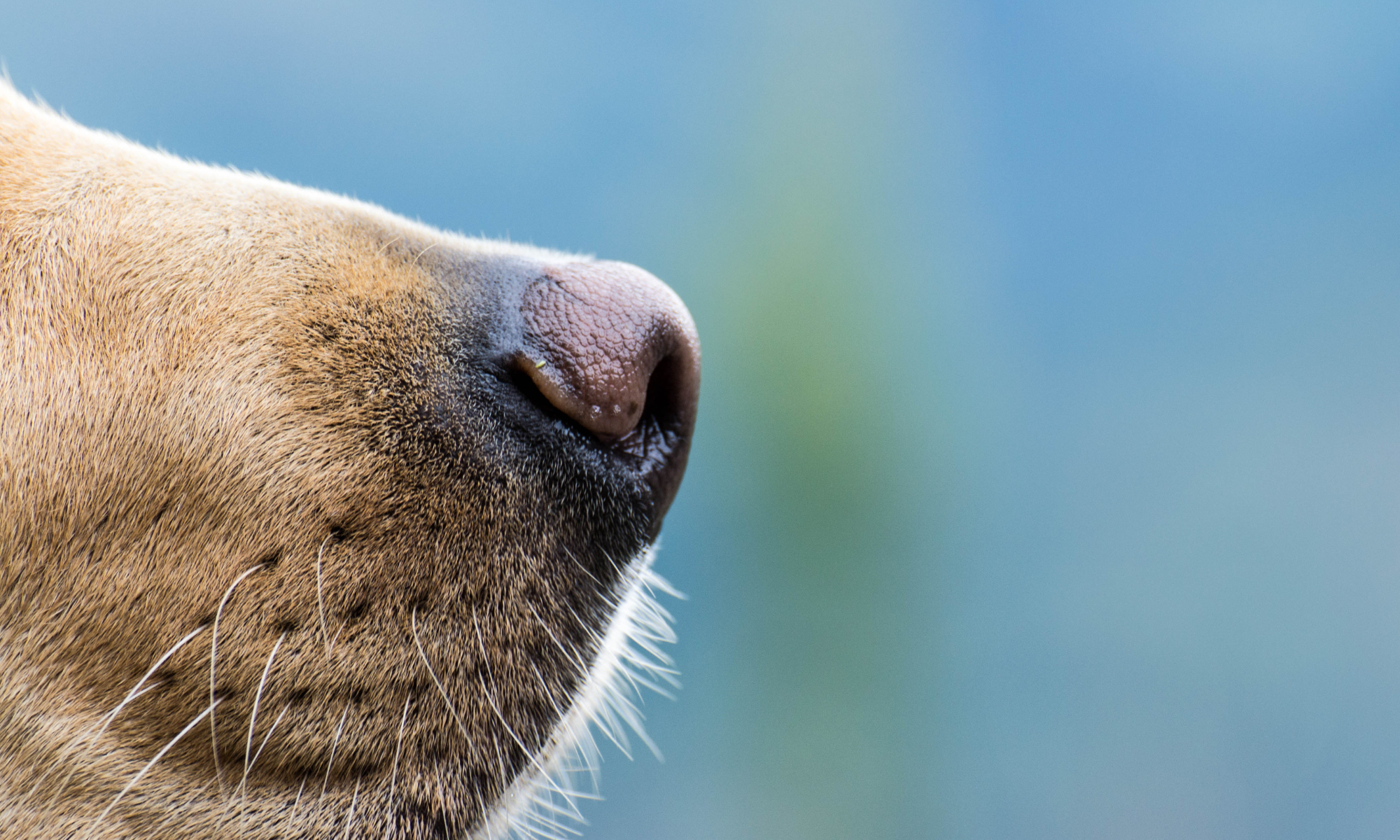
Hand Target
Hand Target is a basic building block.
This is an extraordinarily simple task, yet it provides seemingly infinite benefits:
1) You’ll teach your dog that human hands are something to get excited about, minimizing the risk of a bite.
2) You’ll have a way to “call” your dog if he ever goes deaf.
3) You can use it to call your dog away from literally anything!
a) Use it to redirect your dog’s attention when he’s barking his head off at the mail carrier.
b) Use it to distract your dog from a stressor.
c) Get your dog away from another dog that seems “iffy.”
4) You can use it to combat boredom. Once your dog understands the task, you can make it really fun! You can use this to teach new and more difficult
5) Use it to get your dog into the “heel” position (or any position).
6) Use it to move your dog out of the way, instead of “manhandling.”
Supplies:
– Clicker
– Treats + treat bag
– A dog
– Your hand
Instructions:
Have your clicker ready in one hand. Present your other hand as a very flat palm. Simply wait until your dog touches your hand with his nose. You do not need to say anything. You do not need to prompt your dog in any way. Just wait. The instant your dog touches your hand, click! and treat. Repeat until your dog seems to understand the game.
Maintain the behavior by “surprising” your dog randomly when you’re not in training mode. Hold out your hand while you’re watching TV, taking a walk, doing yardwork, etc. After successfully training “touch,” perform the maintenance training 3-5 times per day for several weeks or months. When you feel like your dog is racing to touch your hand with enthusiasm every single time, you can bring the maintenance training down to 3-5 times per week if you like, but you might find yourself using the hand target as part of your daily life!

Two Tails: A real life training comparison
It all begins with an idea.
Have you ever wanted to know what the same situation would look like on dogs trained using different methods?
What happens when a shock collar doesn’t work?
How does food prevent unwanted behaviors?
We’ll explore these questions below.
The Long Line
I was walking Calvin, a sweet and exuberant little Cocker Spaniel, on a 15 long line. He loves people and will jump on
anyone within reach. I saw a family with small children taking a walk together, making their way towards us. I walk Calvin on a 15-foot long line, so I reeled in the leash to make it shorter. We played “Look at That!” while the family passed us. Calvin wanted to interact with the children, but we were working on being okay with letting people walk by without rushing up and interrupting their day. As soon as the family
passed us, Calvin and I were able to happily continue our walk like nothing happened.
The Shock Collar
About two blocks behind me, I saw the family approach a man walking his sweet and exuberant German Shorthair Pointer. Instead of a leash or a long line, this dog was wearing an electronic collar (a shock collar) with no physical control. The dog forged ahead of his owner, excited to interact with the children. The man called his dog back, but the dog ignored the commands. The man pulled out a remote and pushed the button. The dog shook his head, but continued moving toward the children. The man fiddled with the remote, I assume to turn the stimulus up. He called the dog and was ignored again. He pushed the button and the dog shook his head more forcefully, and this time, the dog stopped forward movement.
I noted that the dog didn’t make any attempt to move toward his owner, and instead chose to wait for his owner to catch up. The dog walked near his owner for a few seconds, but when the family was close enough, he just couldn’t handle it, and jumped on all of the children. The family didn’t seem to mind, but the owner was visibly frustrated and angry. He pushed the button again when he wanted to keep moving but his dog wanted to play. The dog reluctantly complied, but was immediately confronted with a new challenge.
The human-dog pair was very close to an intersection at this point, when a pickup came through. The dog, still coming down from the excitement of meeting the children, ran out into the intersection, ignoring his owner’s distressed cries. I saw the owner desperately push buttons on the remote, and he pushed the big button again, after which his dog yelped and whimpered. While this did stop his dog from getting run over,
his dog still made no attempts to go back to his owner. Instead, the dog just stood in the middle of the street, uncomfortably waiting for his owner to come to him. The man stormed out of sight, visibly upset. I have no idea what happened after the man and dog left my field of vision, but I know from its body language and facial expressions that the dog was confused and scared.
The Result
The shock collar did not prevent this dog from reaching its target (the family), and the shock collar did not prevent this dog from running into the street. What if this dog was not just overly eager and friendly? What if this dog was intent on harming the family? What if, in his attempt to control his dog by using pain, the owner tipped his dog over from eager to aggressive by applying pain? Does the owner even know that “tipping” is a thing that can happen? What if, the fear and pain from the collar had caused the dog to run fast and far away in an attempt to escape the aversive stimulus? Does the owner know that this is a possible outcome? There are so many risks associated with using a device like a shock collar, and most dog owners do not even know what those risks are.
This example is in no way reflective of how a highly skilled “balanced” or punishment-based trainer would use the tool, but it highlights some of the reasons that it is dangerous for most people to use this tool. The International Association of Animal Behavior Consultants (IAABC) recently released a statement on the use of shock.
“The use of shock in training and behavior is not considered a best practice by the IAABC or the Joint Standards of Practice, and is strongly discouraged.
Our goal is to eliminate the use of shock devices from training and behavior work, and to do so by modeling, educating, and providing members with effective alternatives.
We focus on reinforcing desired behaviors, and always ask the question, “What do you want the animal to do?” Relying on punishment in training does not answer this question, and therefore offers no acceptable behavior for the animal to learn to replace the unwanted behavior. These LIMA guidelines do not justify the use of aversive methods and tools including, but not limited to, the use of electronic, choke or prong collars in lieu of other effective positive reinforcement interventions and strategies.
Members found failing to follow these requirements are subject to Ethics Committee recommendations for education, suspension of membership, or revocation of certification.”
Members of the IAABC are top-rated behavior consultants across the world. They are held to high educational and ethical standards. The IAABC is telling its highly skilled and educated certificants that shock is unhelpful at best, harmful at worst, and should be eliminated. Imagine the damage that a pet owner with fewer skills and less education can do.
Ethics aside, research shows, time and again, that rewards-based training is safer, faster, and more effective.
————————————————————————————————————————————–
To find a skilled, ethical and certified trainer, check the directory of Certified Professional Dog Trainers at www.ccpdt.org, the International Association of Animal Behavior Consultants at www.iaabc.org, or reach out to The Laughing Dog at www.LaughingDogFM.com.

Clickers Galore! Which One is Right for You?
It all begins with an idea.
There are so many clicker choices! Where is a person supposed to start?
If you are looking at all of the options available to you, and feeling overwhelmed, I hope this post can be of help.
The classic box clicker produces the loudest, most crisp-sounding click. It is super-cheap and readily available. You can find it at any pet store. I think I’ve even seen a box clicker at Walmart. I will say that the downside to these clickers – they are difficult to use while wearing mittens or thick gloves. This may not not the best choice for pets that are sensitive to loud noises.
Then there is the the I-Click. It is popular among professional trainers, and for good reason! It is easier to use while wearing mittens or gloves, and it is easy to click with your foot. If you’re ever working on something that requires both of your hands, but you can use your toe/heel to mark the behavior, this is probably the clicker you want to use.
My personal favorite is this Starmark-style clicker. It fits just right in my hand, and I can easily use it facing towards or away from my palm. The sound quality and volume is close to that of a box clicker.
There are some fancier clickers that fill a niche. The Clicinco Clicker Ring is a clicker that is worn on a finger like a ring. I have not yet used one. I’ve heard mixed reviews on this clicker. Some people love it, and others have been less impressed. I’m told it is not a loud click, but if you are looking for something to wear like a ring, this may be the right clicker for you.
This dome-shaped clicker might be easier for some folks to use. This brass clicker uses more of a squeezing, rather than a pushing motion. It is loud - too loud for my ears, but it might be a good piece of equipment for folks that do a lot of outdoor and distance training.
This PetSafe clicker is another one that you can wear on your finger. I have two of these! One for my car and one for my living room. I like it a lot. It produces a softer click. It is fairly easy to use when wearing thin-medium weight gloves, which is great when you live on the Minnesota-North Dakota boarder like me. I typically wear this one when I am training all day and my hand gets fatigued from holding a box clicker all day.
Then we have the Click Stick! I also have one of these. This is great for teaching a targeting behavior to animals that don’t like to have their space invaded, are uncomfortable getting close to your body, or are too dangerous to work closely with.
Finally, we have this ingenious clicker that attaches to the leash! I have one of these and LOVE it. Fairly easy to use with gloves or mittens, but not as easy as the I-Click clicker. It is a softer click than the box clicker.
The industry is constantly evolving and experiencing innovations, so there may be more clicker styles than I have listed here. But I hope that this list can help my readers choose a clicker that will function well in their daily lives!

Car Trouble
Mason once threw himself out of a moving car.
Mason had a lot of trouble in the car. For the first two years of his life, riding in the car with him was incredibly stressful. He would whine and drool the entire trip, no matter how long the ride was. He’d scream so loud, it made me dizzy. He would try to attack the cars around us. He threw his body against the windshield so hard, it cracked. At one point, he even threw himself out of a moving vehicle.
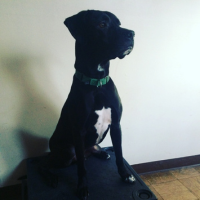
Mason
If a client came to me with these problems, the first thing I’d suggest is using a crate to confine the dog and a blanket to block their view. I tried this with Mason, but he broke out and was somehow even more agitated than if I just let him ride loose. It was awful. If you’re reading this, odds are you’re dealing with something similar. I have good news; he’s better now; almost normal! Here’s what I did:
Chapter One: Stationary Work
Week One: I put a moratorium on going places until the dog was ready. Fed all meals in the stationary car. I fed out of a Kong or other food puzzle to make the training sessions longer and more interesting. I sat in the driver’s seat while he was eating. During Week One, I’d get out of the car and release the dog before he finished eating, leaving him wanting more, and wanting to get back in to finish (I wouldn’t recommend this for a heavy resource guarder. My dog has very little guarding behavior).
Weeks Two and Three: I’d have us sit in the stationary car for a few minutes, sometimes at mealtime, sometimes with just a quick little snack. I always brought him out before he got worked up. I varied the amount of time we were in the stationary car so that he didn’t learn to count the seconds/minutes. My protocol here is based on Dr. Karen Overall’s Relaxation Protocol.
Chapter 2: Add Some Motion
Note: Weeks 4, 5,6 and 7 I used the highest value reinforcer for my dog. After that, I switched back to his kibble because he demonstrated that he slightly more comfortable, and would accept the kibble as a reinforcer at 8 weeks.
Week Four: I spent this week starting the ignition and letting the car run while I fed the highest value reinforcer for my dog – rotisserie chicken. Again, I varied the amount of time we spent in the car. Sometimes it was 2 seconds, sometimes it was 3 minutes.
Week 5: Now I began putting the car in drive or reverse but not taking my foot off the brake. This was just to get him used to hearing the gears.
Weeks 6 through 14: I would drive for a quarter of a block for a week (randomly alternating reverse driving), half a block, around the block. After a few weeks I really randomized the length of drives. Sometimes we’d go back to a quarter of a block (again, keeping Relaxation Protocol in mind). I always had treats/kibble at the ready to throw into the backseat to help maintain control. After about two months, I thought the difference was noticeable. We made slow but steady progress weekly.
We stayed at this stage for about three years, mostly because I was comfortable at this level, and didn’t do more to advance, and partly because it is tricky to keep the dog under threshold while you’re driving. I did this with no helpers. I think if I’d had helpers to do the driving it would have cut down the training time. An alternative would be some sort of remote trainer like the Treat and Train.
Chapter 3: Refinement
We maintained at a level of “if we have enough kibble to provide him with near-constant reinforcement, we can go anywhere.” It was exhausting, and we’d have setbacks all the time. He’s also dog reactive, so every time we saw a dog while in the car, we’d have to go back to the protocol for weeks 6-14. After about three years of this, he was doing quite well on the freeway. I was super happy with the improvement. But he was still struggling in town, getting especially worked up when we’d stop at stop lights or make turns. I learned to toss treats in the back when I start slowing down. After a few months of that added practice, he became pretty decent to drive around with.
He still has trouble when we see other dogs. I’m not sure this will ever go away completely, but I started driving by dog parks at a far-away distance with our highest value reinforcer, and after 6 months, I was able to reduce our distance and that reinforcer to regular kibble again. After roughly 2 more years of this added practice, for the first time, I drove by a dog and he didn’t freak out. He saw the dog, got excited, and looked to me for a piece of well-earned kibble. It’s been a long time coming, but I feel like we have finally arrived.
If you made it this far, please enjoy this boring video showcasing how our car rides are going these days!
If you’d like more personal help, set up a consultation here.