
Adding Duration without Adding Frustration
Building duration is, in my opinion, the hardest part of training a behavior.
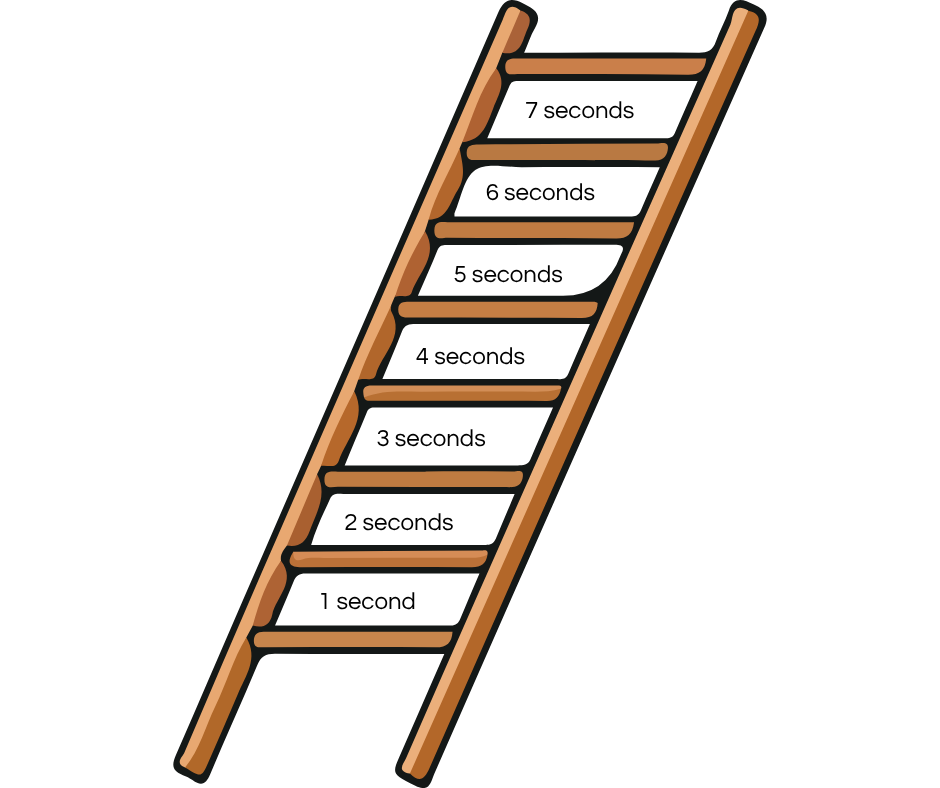
Humans often try to build duration like we’re climbing a ladder: 1 second, 2 seconds, 3 seconds, 4 seconds… We like things that look linear. And we have a tendency to keep pushing until we find the absolute limit.
Unfortunately, when we train this way, we’re usually building frustration into the behavior at the same time. If we repeatedly push until they fail, we can accidentally teach them that duration is stressful and unpredictable.
Dogs want to know that they’re doing the thing that will earn them what they want. If we suddenly ask them to hold a position longer than they’re ready for, they may start to worry: Am I still doing this right? When is the reward coming? Eventually, they may break position.
So how do we help them understand that they're doing the right thing that will earn the reward?
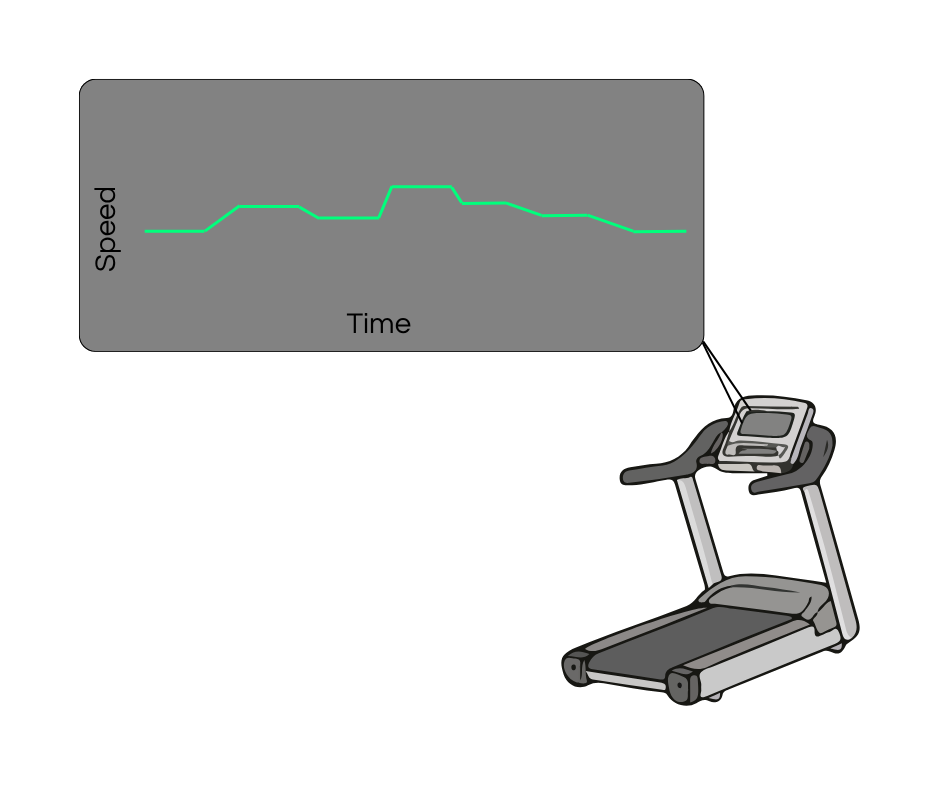
I like to think about it like a pre-set treadmill workout.
A good workout will start easy to warm up, get harder, give you a break, get harder again, and then taper off to cool down. It isn't just an endless climb until you physically can't do it anymore (or get frustrated and bail). You have the benefit of knowing that the hard parts are temporary, and that there is a payoff coming.
I think we can give our dogs that same benefit.
If they learn that the most difficult repetition won't last forever—and that easier repetitions (and rewards) are coming—they have less reason to worry about whether they're going to be successful.
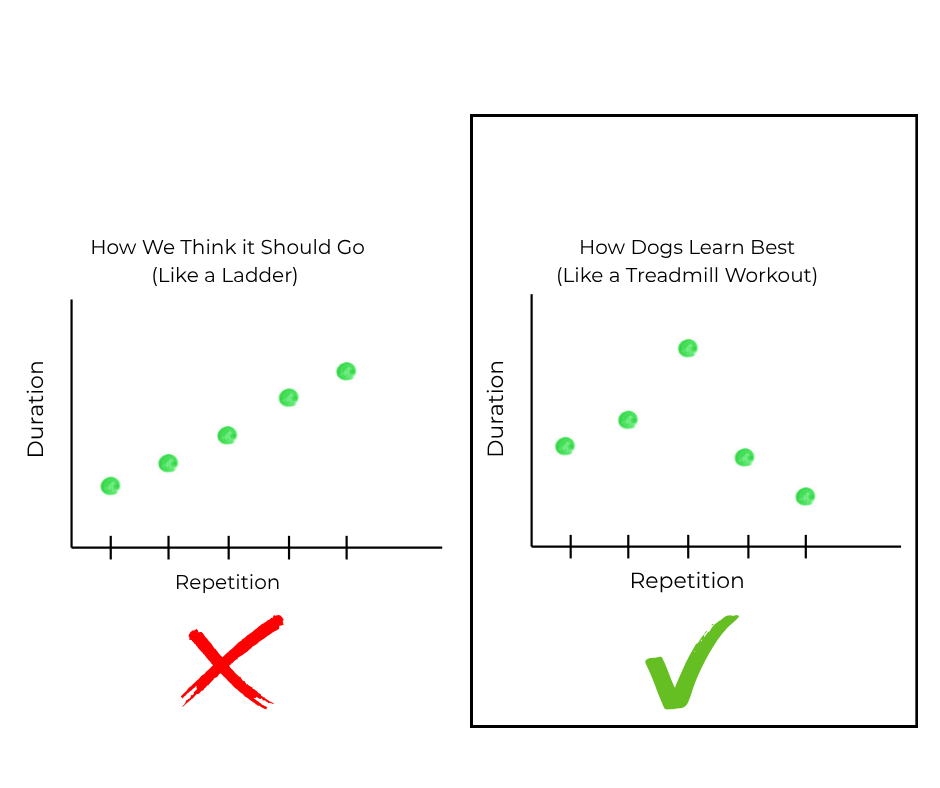
My favorite way to build duration.
I like to work in sets of five. I might do one to three sets of five reps per training session, depending on how the animal is feeling that day.
The important part is that my goal duration lands somewhere in the middle of a set, rather than being the final and hardest repetition.
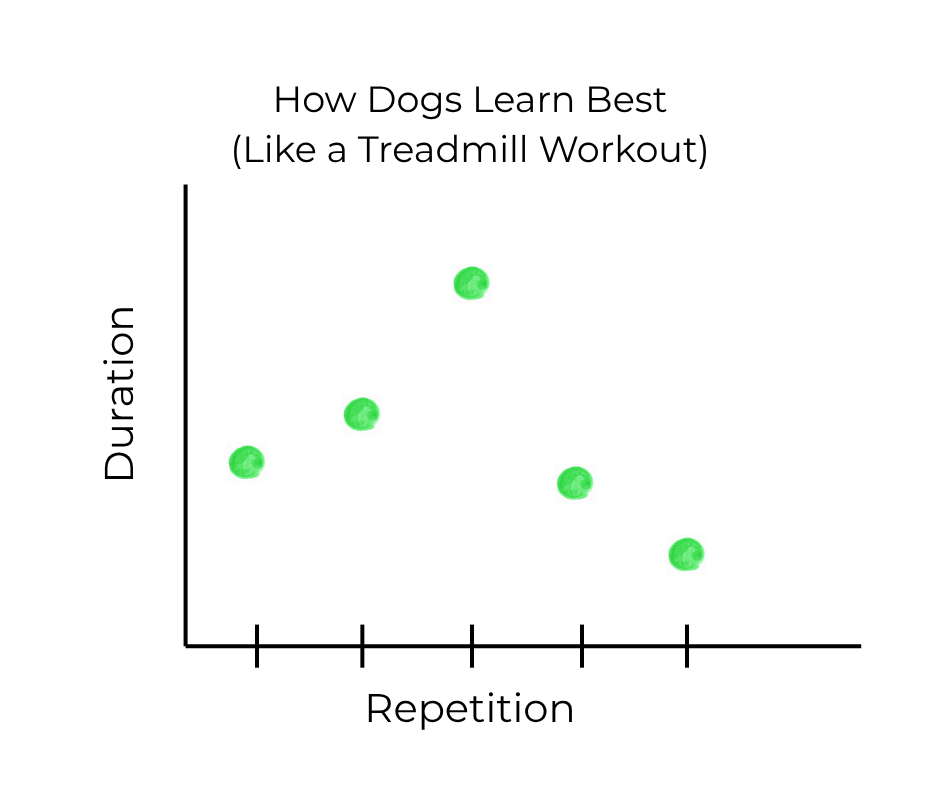
For example, if my goal is 7 seconds, a set might look like:
2 seconds → 4 seconds → 7 seconds → 3 seconds → 1 second
In between each of these repetitions, my dog is earning a click and treat.
The dog doesn't have to work progressively harder and harder until they fail. They get some easy wins before the difficult repetition, and then they get easier repetitions afterward.
That helps keep the dog confident that they're doing the right thing and that reinforcement is predictable.
It also helps me as the trainer. Instead of thinking, “How long can I make them hold it?”, I'm playing a little game with myself: “How can I arrange these repetitions so that my goal duration happens successfully?”
That makes the process more fun and helps prevent me from accidentally pushing the dog past their current ability.
And that's important because failure isn't necessarily where we want to find the edge of the dog's ability. If we repeatedly push until the dog breaks position, we will get a lot of information about their current limit—but we will also create frustration, stress, and a behavior that becomes harder to train over time.
We're not trying to find the longest duration the dog can survive.
We're trying to build a dog who thinks, “I know how this game works. I know I'm doing it right, and I know the good stuff is coming.”
And don't forget to play!
Inserting play breaks throughout your training session can give the dog a chance to decompress and re-engage. Play after learning increases retention.
The goal isn't just a dog who can hold a position for a long time. We want a dog who feels confident about holding that position.